Pennsylvania Governor Josh Shapiro used his Atlantic Council debut Friday to frame a muscular vision of American global leadership centered on democratic alliances, technological competition with China, and energy dominance — a platform widely read as a dry run for a 2028 presidential bid. The speech arrives as Europe faces a converging set of strategic vulnerabilities: China’s temporary pause on rare earth export restrictions offers only a reprieve for critical mineral supply chains, Norway’s gas infrastructure requires hardening against Russian hybrid threats, and ECB President Christine Lagarde warns the continent’s economic model is approaching a breaking point. Shapiro’s emphasis on “building at home to lead abroad” underscores a growing transatlantic recognition that industrial capacity and supply chain resilience are now prerequisites for geopolitical credibility.
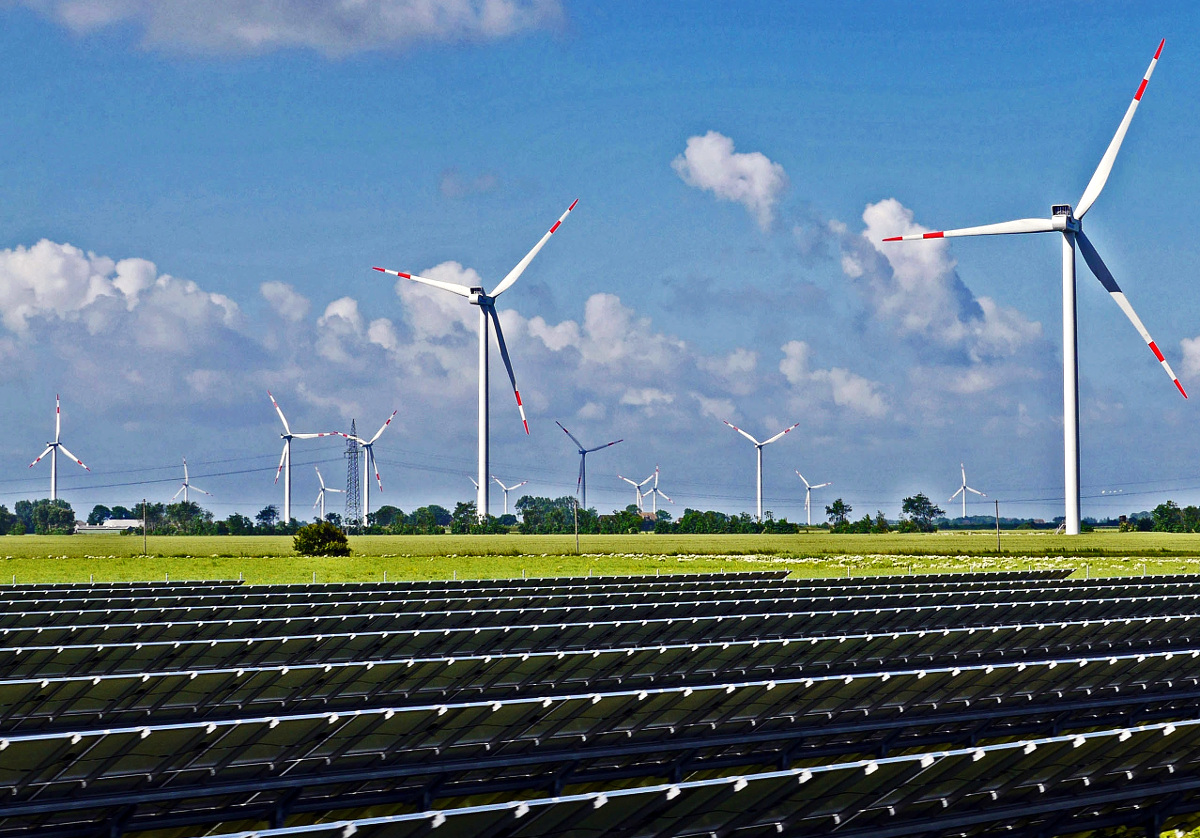 Photo: hpgruesen (CC0) / Wikimedia Commons
The Rare Earth Reprieve Masks Structural Dependency
China’s decision to extend its pause on rare earth export controls — announced Saturday by EU Today — provides European manufacturers a narrow window to diversify, but does not alter the fundamental asymmetry. Beijing still processes roughly 90% of global heavy rare earths essential for permanent magnets in wind turbines, EV motors, and defense systems. The pause, reportedly linked to ongoing EU-China trade talks on electric vehicle tariffs, functions as leverage rather than concession. European Commission officials privately acknowledge that even with accelerated permitting for projects in Sweden, Greenland, and Norway, domestic supply cannot meet more than 15-20% of demand before 2030. The strategic vulnerability is compounded by China’s simultaneous tightening of gallium and germanium exports — dual-use semiconductors materials where Beijing holds similar choke points. Shapiro’s call for a “critical minerals NATO” reflects growing bipartisan consensus that mineral security requires coordinated stockpiling, joint investment in processing capacity outside China, and reciprocal trade enforcement — but European partners remain divided on whether to pursue strategic autonomy or managed interdependence.
Norway’s Gas Shield and the Limits of Energy Decoupling
The CEPA report on protecting Norway’s gas infrastructure from Russian hybrid operations reveals the fragile underpinnings of Europe’s post-Russian energy architecture. Norway now supplies roughly 30% of EU gas demand via a network of subsea pipelines and processing plants that are inherently difficult to defend against sabotage, cyber intrusion, or covert seabed operations. The Nord Stream attacks demonstrated both the vulnerability and the attribution challenge. NATO’s enhanced Baltic Sea patrols and new undersea cable monitoring initiatives address symptoms, not root causes. Europe’s gas demand remains structurally elevated despite renewable expansion — German industry alone requires 80-90 billion cubic meters annually for baseload power and chemical feedstocks that electrification cannot yet replace. The Anadolu Ajansı interview on electrification as Europe’s competitiveness pathway underscores the tension: energy-intensive industries need affordable, reliable power now, but the grid build-out, permitting reforms, and storage deployment required for full electrification run on decade-long timelines. Shapiro’s vision of US LNG as a strategic bridge fuel aligns with European buyer interests, yet long-term offtake agreements face political headwinds on both sides of the Atlantic over climate commitments and price volatility.
Lagarde’s Pre-Crisis Warning and the Fiscal-Straategic Trap
ECB President Lagarde’s Friday intervention — urging Europe to act “before economic threats become crises” — frames the continent’s predicament in stark terms: stagnant productivity, aging demographics, defense spending gaps, and the investment needs of the green transition are colliding with fiscal rules designed for a different era. The EU’s revised Stability and Growth Pact offers limited flexibility; national governments face rising borrowing costs as markets price in structural deficits. Germany’s constitutional debt brake, France’s pension liabilities, and Italy’s debt-to-GDP trajectory constrain the very public investment needed for defense industrial base renewal, grid modernization, and critical mineral projects. Shapiro’s Atlantic Council argument that American economic renewal — via the CHIPS Act, IRA, and IIJA — provides a template for democratic delivery ignores the US advantage of reserve currency status and deeper capital markets. Europe’s equivalent — the Strategic Technologies for Europe Platform (STEP) and proposed Competitiveness Fund — remain an order of magnitude smaller and fragmented across 27 capitals. The risk is a slow-motion strategic decay: Europe retains regulatory power but loses the industrial base to shape standards, ceding rule-setting to Washington and Beijing while its own firms relocate production to jurisdictions with cheaper energy and clearer permitting.
Outlook: Converging Timelines, Divergent Politics
The next 18 months will test whether Shapiro’s rhetoric translates into a durable bipartisan framework or remains campaign positioning. Key inflection points include: the EU’s Critical Raw Materials Act implementation (first strategic project designations due Q1 2027), NATO’s 2027 capability targets requiring European defense spending above 3% GDP, and the US 2028 primary cycle that will force clarity on trade, alliances, and China policy. Europe’s rare earth stockpiling targets (six months’ consumption by 2027) and Norway’s pipeline protection investments (NOK 15 billion approved through 2028) signal recognition of the threat timeline. But Lagarde’s warning suggests the economic enablers — fiscal space, private capital mobilization, permitting reform — are not moving at the same speed. The intelligence community assesses a moderate-to-high probability of at least one significant supply disruption (rare earths, gas, or semiconductor materials) before 2028, most likely triggered by Chinese coercion during a Taiwan Strait crisis or Russian escalation in the Baltic. Shapiro’s vision of American leadership presupposes the capacity to respond; the open question is whether Europe can reduce its exposure enough to be a partner rather than a dependent when that moment arrives.
Sources
- Atlantic Council - “Pennsylvania Governor Josh Shapiro outlines his vision for US leadership in the world” (Fri, 20 Nov 2026 22:27:00 GMT)
- EU Today - “China Extends Rare Earth Export Controls Pause as Europe Confronts Strategic Supply Risks” (Sat, 21 Nov 2026 08:30:00 GMT)
- Anadolu Ajansı - “INTERVIEW – Electrification: ‘Way forward’ for a competitive European industry” (Fri, 20 Nov 2026 14:05:01 GMT)
- Center for European Policy Analysis (CEPA) - “Protecting Norway’s Gas From Russia” (Thu, 19 Nov 2026 22:06:06 GMT)
- PRESS Insider - “Lagarde urges Europe to act before economic threats become crises” (Fri, 20 Nov 2026 12:25:28 GMT)