The U.S. Government Accountability Office has concluded that artificial intelligence is fundamentally altering the cyber threat landscape, with offensive applications advancing more rapidly than the federal enterprise can field corresponding defenses. The report, released Thursday, identifies systemic weaknesses in data quality, model governance, and workforce readiness that collectively undermine the government’s ability to harness AI for protective purposes. Without structural reform, the asymmetry between AI-enabled attackers and AI-assisted defenders will widen.
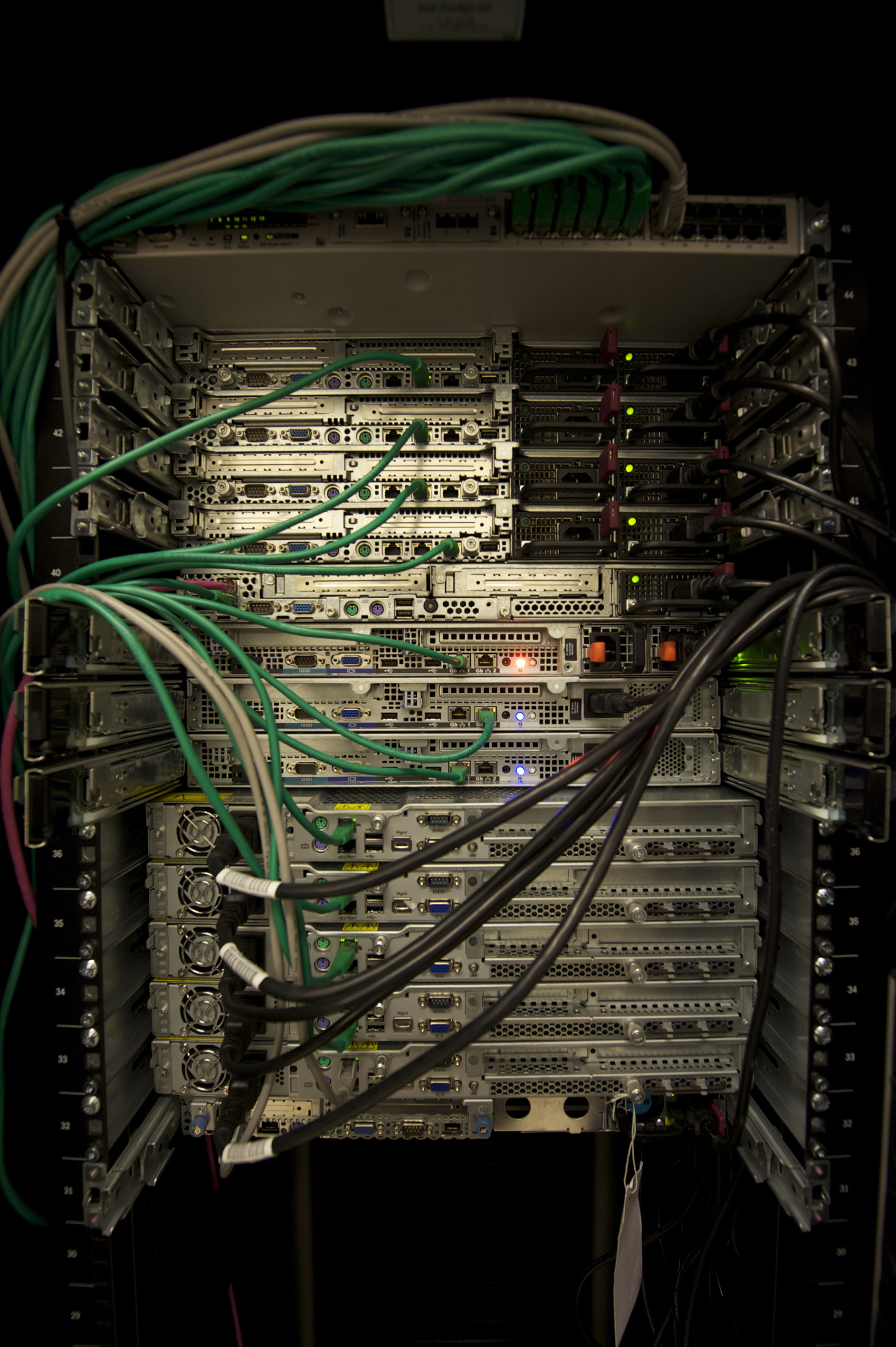 Photo: Abigor (CC BY-SA 3.0) / Wikimedia Commons
Asymmetric Acceleration of Offensive Capabilities
The GAO assessment confirms what private-sector intelligence has tracked for months: generative AI and large language models have lowered the technical barrier for crafting polymorphic malware, automating reconnaissance, and generating convincing social-engineering content at scale. Threat actors no longer need deep coding expertise; they require only prompt-engineering skill and access to open-weight models. Palo Alto Networks’ concurrent analysis of “AI sprawl” documents how unauthorized model deployments inside corporate networks create shadow attack surfaces — unmonitored inference endpoints that leak proprietary data and provide footholds for lateral movement. BeyondTrust’s 2027 forecast goes further, warning that autonomous AI agents capable of planning and executing multi-stage intrusions without human intervention will shift the threat paradigm from “human-on-human” to “machine-on-machine” conflict, compressing dwell time from weeks to minutes.
Federal agencies face a structural disadvantage. Classification restrictions, procurement cycles, and legacy infrastructure prevent rapid adoption of cutting-edge defensive models. While adversaries iterate on commodity GPUs in unregulated environments, government security operations centers contend with FedRAMP authorization queues and data-sovereignty mandates that delay deployment by 12 to 18 months. The GAO found that only 3 of 23 civilian agencies have established continuous red-teaming programs for AI systems, leaving the vast majority blind to model inversion, data poisoning, and prompt-injection vulnerabilities.
Governance Vacuum and Data Integrity Crisis
The report’s most damning finding concerns the absence of enterprise-wide AI governance frameworks. Agencies lack standardized inventories of deployed models, training-data provenance records, and incident-response playbooks tailored to AI-specific failure modes. CDO Magazine’s analysis of the same GAO data highlights that 68% of federal AI initiatives operate without documented data-lineage tracking, making it impossible to audit bias, detect poisoning, or verify compliance with Executive Order 14110. This governance vacuum extends to third-party risk: cloud providers such as AWS now offer managed AI services — Bedrock, SageMaker, Trainium — but shared-responsibility models leave agencies accountable for securing model weights, inference logs, and fine-tuning datasets they neither control nor fully understand.
Allianz Commercial’s latest loss-scenario modeling quantifies the financial exposure. The insurer projects that AI-related cyber claims will compound at 34% annually through 2030, driven by business-interruption losses from model downtime, regulatory fines for biased outputs, and liability for autonomous-agent actions. Current cyber-insurance policies largely exclude “algorithmic failure” as a covered peril, creating a silent coverage gap that could leave federal contractors and critical-infrastructure operators uninsured for AI-driven outages. The GAO recommends that the Office of Management and Budget mandate a unified AI risk register across the federal enterprise, but interagency coordination has stalled over jurisdictional disputes between CISA, NIST, and the National Security Council.
Workforce and Supply-Chain Chokepoints
Technical deficits are compounded by human-capital shortages. The federal cyber workforce gap exceeds 40,000 positions; the subset with dual expertise in machine-learning operations and adversarial security numbers in the low hundreds. Agencies compete with hyperscalers and quantitative-finance firms for talent that commands 300% salary premiums over GS-15 ceilings. The GAO notes that upskilling existing personnel through programs like the Federal Cyber Defense Skilling Academy has yielded only 270 certified AI-security practitioners since inception — insufficient to staff even a single major department’s security operations center.
Supply-chain opacity exacerbates the problem. Federal procurement rules require software bills of materials for traditional code but lack equivalent mandates for model bills of materials. Agencies cannot verify whether open-source foundations — Llama, Mistral, Falcon — have been tampered with during fine-tuning by third-party integrators. Wiz.io’s AWS-focused research demonstrates how compromised container images in public registries can inject backdoors into model-serving stacks, a vector that bypasses traditional code-scanning tools. The GAO urges NIST to extend the Secure Software Development Framework to cover model artifacts, but standardization efforts remain in draft stage.
Near-Term Outlook: Contested Parity Through 2027
The intelligence community assesses with high confidence that the next 18 months will see a proliferation of AI-augmented ransomware campaigns targeting state and local governments, which lack even the minimal defensive maturity of federal agencies. Autonomous-agent frameworks such as AutoGPT and BabyAGI derivatives are already being weaponized for credential stuffing, vulnerability chaining, and data exfiltration at machine speed. Defensive AI — anomaly detection, automated patch prioritization, synthetic-data generation for training — will close specific gaps but cannot overcome systemic governance failures.
Three indicators will signal whether the trajectory shifts: passage of the Federal AI Governance Act currently stalled in committee, CISA’s issuance of binding operational directives for model inventory and red-teaming, and the emergence of a viable federal AI-security talent pipeline via direct-hire authority and pay-banding reform. Absent these, the offense-defense asymmetry will persist, and the first catastrophic failure of an autonomous federal AI system — whether in benefits adjudication, air-traffic management, or nuclear-command support — becomes a question of when, not if.
Sources
- CASRAI. “GAO Report Examines How AI Magnifies Cyberattacks and Enhances Federal Cyber Defense.” November 21, 2026. https://news.google.com/rss/articles/CBMigwFBVV95cUxOSWg5ODFSUDBuV24xY0o0dk5ib3E4N0hEUGFha0JzWk12aldhZ2pEMEZWT2FBOXQwM0dZQUk3bWVxVzhyTkdhQzExRHRUbVdabHRrNUUwdlZ1YVpoMktEblBzcEJySXVKWWR5OUFwOEs1ZUJyenB2UEZDd1dWWlZZckxBaw?oc=5
- Palo Alto Networks. “Navigating the AI Sprawl.” November 19, 2026. https://news.google.com/rss/articles/CBMie0FVX3lxTE9UcHUzdWIyNTdCOV9KSktQZHJvYzJRanJtb0QwSVBEQUZ0M2IxVVUxaVNiZ29yY2hJdzZ0Q21sQmdaVjhCZHg4TlF1bHNubEw5N0tKc3NPeGExYWpQSndwS0E1SDJScHNDdDViNHFMVnhCY3J3WExGdFVIWQ?oc=5
- Allianz Commercial. “Artificial intelligence: loss scenarios and claims developments.” November 18, 2026. https://news.google.com/rss/articles/CBMijgFBVV95cUxNSFkyRGRTMThfdHUzZTFzRVBSenFIM0ZaMFlhbkxvV3ViNkYwcHlaN0xHRm5TYzQyMFhpX0VNczVzblkzNnVxX3B1eFRDR1ZZUUY0ZzJVaFN6R1lGYVcwRmhYbVhfN29BOFFvZGVrVjdIaS1oV0tIbnhNSWNfaWdUMUR3VmtDMFBlUEJDX0ln?oc=5
- Intelligent CISO. “BeyondTrust predicts autonomous AI agents will transform cybersecurity threats in 2027.” November 19, 2026. https://news.google.com/rss/articles/CBMiygFBVV95cUxOZE83d1JRUWlPVU5zTnRKZ0dMTk9QT0JWbU5Eby11YXF4cHpYLXJYQ3RBSXB5eFBiUFlMTGRmZlM5c2JILVZpYTdIcFlDaEZ0SzBaZkZlRFF0d3BtUUtXZXlfVGxtS0RZR3hqeURmRkFjUnFPR1F6TjhnbzZEbnBXWEc1eF9QZUpELTRpVlFXbkZHNnIyVVRKRkowSFJqaFJVVzFEbFlwdmdJdWFLMHFFNXM2Y1RmT1hlZTlkSTJnNC1ESkM1LU9DbDhn?oc=5
- CDO Magazine. “GAO Identifies Data and Governance Gaps as AI Reshapes Cybersecurity.” November 21, 2026. https://news.google.com/rss/articles/CBMivAFBVV95cUxQaDZMOE9LRzZRVmQ3a2J3aFl6Y0xlNUFEalBGdXVQbS1VYWk3T0wzRllhUG1lSXRtNjVLYklUMWhZN1JHZl91bjgwS191SGpwalg4NUNLUzBuNjloUjk4VHgxaXRRT3Y3Um1ib2hETnlnN1pONl9LbTdwYlNUZWVjSEVWOTEwaGNGcVR2cUFlcnpKa0RidktDRFNFbk9mTFZRT1JjcXc3TjN4X002YzIxUS1fa1JoOWZjdjB0Qw?oc=5
- wiz.io. “AWS AI Security: Securing AI workloads on AWS.” November 20, 2026. https://news.google.com/rss/articles/CBMiZEFVX3lxTFBRV2xiaUFfbXA5VkptaEtPNktxUHJUWUJReXVNdEJLVmg1LWI2cDZMUjN0aXdHS2t3WXA5Y0dQSU16VjFhYk5FWFFmQ1FuNXZDNllSSkhXczZSOFVEZm03cXhqMjM?oc=5